SESSION INSIGHT
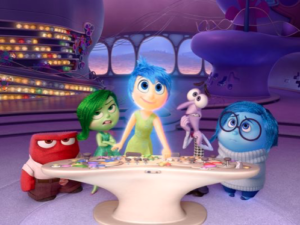 This is not a class in traditional animation and character design, but for anyone getting into motion design, it is something that should be looked at in preparation for the prospects of short animated projects, gaming design, etc. Many times, we might be working in a team environment or with other artists, where our assignment is to take an existing character and bring them to life. Other times, we might take on the responsibility ourselves, meaning the design and construction of a particular character is in our hands.
A good character doesn’t come along easily. For example, let’s take a look at Pixar’s movie, Inside Out.
The creators of this film had the daunting task of creating visual character to represent the emotions: Joy, Sadness, Anger, Fear, and Disgust. The creation of the main character, Joy, took almost 3 years to create but once she was done, the other designs followed quickly. My favorite character from the movie is Sadness; let’s break down what went into making that character.
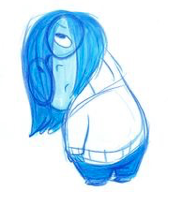 First, since this movie is meant for a younger audience, color is the first recognizable feature of a character. So naturally, Sadness is “blue”. She is also kind of shaped like a tear drop and her hair even behaves a little bit like water. Initial designs of Sadness had her in pajamas. The designer, Albert Lozano, said, “I feel like you stay in your pajamas all day when you’re sad.” Eventually, that changed to a comfy sweater so big you just want to hide in it. It acts kind of like a safety blanket.
Everything from the way a character looks to the way they act is thoroughly thought out and whenever you want to design your own characters, you also need to think about ways to visually represent them and their personality.
The funny thing is that we see them pretty much every day. In commercials, TV shows, video games, on websites and more, yet creating one can be quite challenging. There are some things that a new designer can keep in mind to help them along the way in thinking up a good character. Check out this article on design from the folks who know it best at PIXAR: (if you don’t see the article below, click here)
 Pixar story artist Emma Coats has tweeted a series of “story basics” — guidelines that she learned from her more senior colleagues on how to create appealing stories:
#1: You admire a character for trying more than for their successes.
#2: You gotta keep in mind what’s interesting to you as an audience, not what’s fun to do as a writer. They can be very different.
#3: Trying for theme is important, but you won’t see what the story is actually about til you’re at the end of it. Now rewrite.
#4: Once upon a time there was ___. Every day, ___. One day ___. Because of that, ___. Because of that, ___. Until finally ___.
#5: Simplify. Focus. Combine characters. Hop over detours. You’ll feel like you’re losing valuable stuff but it sets you free.
#6: What is your character good at, comfortable with? Throw the polar opposite at them. Challenge them. How do they deal?
#7: Come up with your ending before you figure out your middle. Seriously. Endings are hard, get yours working up front.
#8: Finish your story, let go even if it’s not perfect. In an ideal world you have both, but move on. Do better next time.
#9: When you’re stuck, make a list of what WOULDN’T happen next. Lots of times the material to get you unstuck will show up.
#10: Pull apart the stories you like. What you like in them is a part of you; you’ve got to recognize it before you can use it.
#11: Putting it on paper lets you start fixing it. If it stays in your head, a perfect idea, you’ll never share it with anyone.
#12: Discount the 1st thing that comes to mind. And the 2nd, 3rd, 4th, 5th – get the obvious out of the way. Surprise yourself.
#13: Give your characters opinions. Passive/malleable might seem likable to you as you write, but it’s poison to the audience.
#14: Why must you tell THIS story? What’s the belief burning within you that your story feeds off of? That’s the heart of it.
#15: If you were your character, in this situation, how would you feel? Honesty lends credibility to unbelievable situations.
#16: What are the stakes? Give us reason to root for the character. What happens if they don’t succeed? Stack the odds against.
#17: No work is ever wasted. If it’s not working, let go and move on – it’ll come back around to be useful later.
#18: You have to know yourself: the difference between doing your best & fussing. Story is testing, not refining.
#19: Coincidences to get characters into trouble are great; coincidences to get them out of it are cheating.
#20: Exercise: take the building blocks of a movie you dislike. How do you rearrange them into what you DO like?
#21: You gotta identify with your situation/characters, can’t just write ‘cool’. What would make YOU act that way?
#22: What’s the essence of your story? Most economical telling of it? If you know that, you can build out from there.
This short video helps us understand a bit more on this topic:
Puppet Tool in After Effects:
DUIK Character Rigging in After Effects:
For this session’s tutorials, you will need to use the materials provided in order to follow along.
