SESSION INSIGHT
Motion graphic design is a part of the larger world of still image/graphic design, but uses graphic design principles in a film/video/game production context (or other time-based evolving visual medium) through the use of animation or filmic techniques. Examples include kinetic typography and graphics you see as titles for a film, or opening sequences for a television show/series or web-based animations and station identification logos for television channels. Although this art form has been around for decades, it has taken quantum leaps forward in recent years in terms of technical sophistication.
The elevation of this art form is largely due to technological advancements. Computer software for the film and video industry have become vastly more powerful and more available at lower costs. The leading program used by motion graphic designers is Adobe After Effects, which is what we will be using in this class. This program allows you to create and modify graphics in a time-based environment. After Effects (AE) is sometimes referred to as the “Photoshop for film.” If you are familiar with Photoshop, then you will see many similarities between the two.
Recently, motion graphics design needs more than a few tools and practices to be created smoothly. Tools like Maxon’s Cinema4D has integrated tools to create motion graphics, such as the native MoGraph plugin, or ICE of Softimage that can also be used for similar purposes.
A typical motion designer is a person trained in traditional graphic design who has learned to integrate the elements of time, sound and space into his/her existing skill-set of design knowledge. Motion designers can also come from filmmaking or animation backgrounds.
School of Motion made a very nice short film helping us understand what motion designers really do.
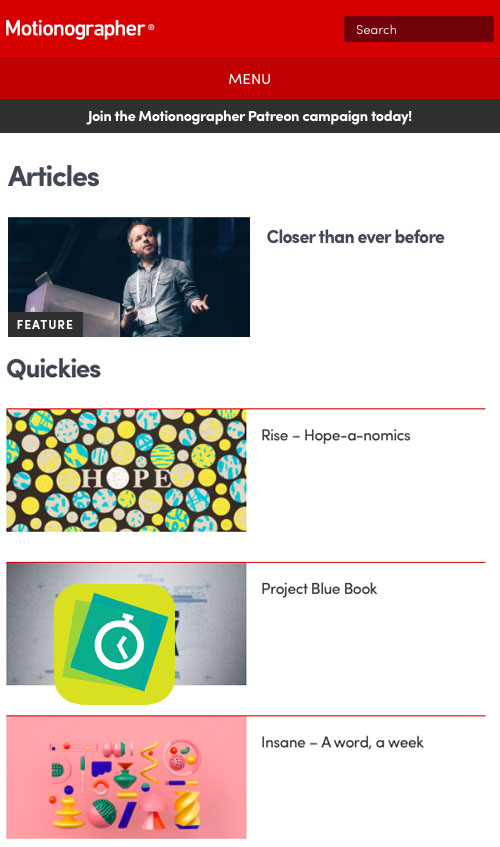
The website motionographer.com is something you need to bookmark and visit regularly – for inspiration, information and a connection to the styles that are hot and the artists and studios that are producing this work.
Motion graphics have become an essential part of the way we share our stories, deliver an audience information and entertain people. Graphic design has always been a platform for creative and intelligent content delivery, whether it’s a logo saying, “stop in here, I make shoes,” or a playbill letting you know what great performance is happening tonight at the theater. Since so much of the content we absorb every day now come in the form of media on screens, it makes sense that the addition of movement, video and audio help elevate the experience that we are trying to create.
I found this article by Adrienne Erin to be a pretty good read about why we make motions graphics. Please read: (click here if the article does not show below)
Or download the PDF to read…

Many students join this class because they understand that it will help tuck one more tool in the toolbelt, and this is true. The more capable you can be as a digital artist, the better. Even if you don’t necessarily have your primary focus in a particular field, having the knowledge and understanding of how it works and what it takes to create something gives you the invaluable ability to communicate clearly and effectively with those whom you are working with that ARE focused in that field.
Some students are here to because they truly want to become motion graphic artists, and that’s great, too. However, you must understand that there is much more to it than just knowing the software. It’s the digital artists who truly invest their energies into the whole core of design essentials that rise to the top and become successful leaders in this field. Check out this article by Mark Masters (great name, by the way…) from Digital Tutors. He reminds us that we should be thinking about much more than the tools. (Click here if the article does not show below)
Or download the PDF…